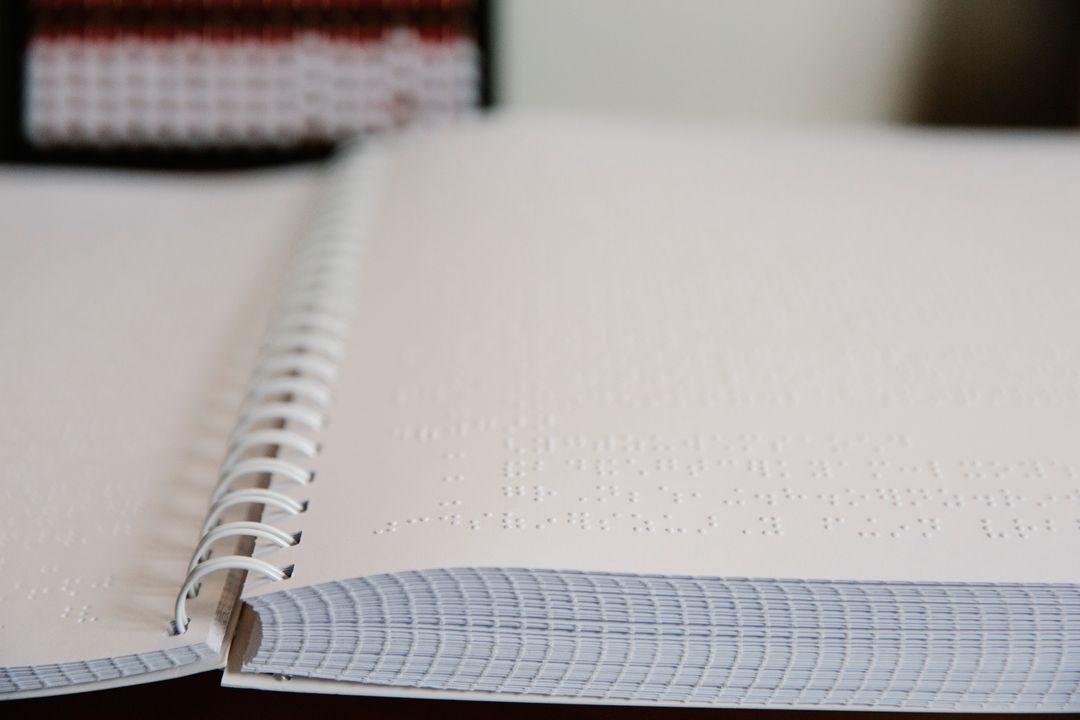
The Scroll Never Stops. But Print Does.
Right now, somewhere, someone is swiping past your digital ad without even registering it exists. They are not being rude. They are just doing what humans do in 2026 , filtering out an almost incomprehensible volume of digital noise. Emails, banners, social feeds, push notifications, pre-roll ads, retargeting pixels. The digital world is a relentless, ever-refreshing torrent of content competing for a fraction of a second’s attention.
And then a printed piece lands on the desk. Or drops through the letterbox. Or gets handed over at an event.
People pick it up. They hold it. They read it. They put it down and pick it up again.
That is not nostalgia. That is neuroscience. And in 2026, it is one of the most powerful competitive advantages a business can deploy.
Digital Noise Is Louder Than Ever
The average person in the UK now encounters thousands of brand messages per day. Most are digital. Most are skipped, blocked, or simply not seen. Click-through rates on display advertising have collapsed to fractions of a percent. Email open rates, even for well-managed lists, hover around 20 to 30 percent on a good day. Organic social reach for business pages continues its long, slow decline.
None of this means digital marketing is worthless. It absolutely has its place. But it does mean that standing out in a digital-only strategy is increasingly expensive and increasingly difficult. The brands that are winning in 2026 are the ones smart enough to combine digital reach with the undeniable stopping power of print.
The Science of Tactile Memory
There is a reason a printed brochure feels more trustworthy than a landing page. It is not just perception , it is physiology.
Research consistently shows that physical media engages more areas of the brain than digital screens. When someone holds a printed piece, the tactile experience creates stronger memory encoding. The weight, the texture, the finish , even the smell of fresh print , all contribute to a sensory experience that digital simply cannot replicate.
This is what neuroscientists call embodied cognition. The physical act of holding something creates a sense of ownership and relevance that a scrollable feed cannot manufacture. A beautifully printed brochure, a well-crafted direct mail piece, a premium business card , these are not just marketing materials. They are physical objects that carry your brand into someone’s world and stay there.
Dwell Time: The Metric Digital Marketers Wish They Had
Dwell time is the measure of how long someone spends with your marketing message. In digital, it is brutally short. A social post might get two seconds. A banner ad, half a second. Even a well-crafted email is typically scanned in under 15 seconds.
Print tells a different story. A direct mail piece, on average, receives significantly more engagement time than a comparable digital message. People sit with it. They share it with someone nearby. They pin it up, or leave it on the kitchen worktop for a week. Some pieces of print outlive entire digital campaigns.
For businesses that have something worth saying, print gives them the space and the time to say it properly. That is not a small thing.
Trust Signals: Why Print Still Signals Credibility
There is a perception that has quietly built up over years of digital saturation , and it works in print’s favour. When something is printed, it feels considered. It feels invested in. Anyone can fire off a social post in 30 seconds. But commissioning, designing, and producing a high-quality printed piece signals that a business takes itself seriously.
For service businesses, professional firms, hospitality venues, and anyone where reputation matters, print is a trust signal that digital simply cannot replicate. A well-produced brochure on premium stock says something about a business before a single word is read. It says: we care about the details. We take your experience seriously. We are not cutting corners.
That is the kind of first impression that converts.
Response Rates: What the Data Actually Shows
The Data and Marketing Association has consistently reported that direct mail achieves response rates significantly higher than email and paid digital. Figures regularly cited show direct mail response rates of 4 to 9 percent, compared to email response rates often below 1 percent for cold or semi-warm audiences.
Personalised print , where every piece is tailored to the recipient , pushes those numbers higher still. When a printed piece speaks directly to the person holding it, with their name, their relevant offer, or their local area featured, the response rate climbs dramatically. Print is not a blunt instrument. Done properly, it is a precision tool.
Print and Sustainability: Defending the Truth
One of the most persistent myths in marketing is that print is bad for the environment and digital is clean and green. Print Lord stands firmly alongside Two Sides in challenging this narrative , what Print Lord calls the propaganda of the paperless lie.
The truth is more nuanced and more interesting. Print produced from responsibly managed forests and recycled fibres has a well-documented, auditable environmental footprint. It is a physical product from a physical supply chain that can be measured, managed, and improved. The paper and print industry has made enormous strides in sustainable forestry, carbon reduction, and responsible sourcing.
Digital, meanwhile, carries its own substantial environmental cost , in server farms, device manufacturing, and energy consumption , that is largely invisible and rarely accounted for. Encouraging people to ‘go paperless to save the planet’ is, at best, an oversimplification. At worst, it is greenwash.
Choosing print is not an environmental compromise. It is an informed choice, made with honesty about where materials come from and how they are produced. Print Lord champions this truth on every job.
Make Your Mark This Summer
Summer 2026 is a season full of opportunity. Events, festivals, hospitality launches, exhibitions, outdoor campaigns, retail pushes , all of them need print that works as hard as the businesses behind them. Banners that stop people in their tracks. Flyers that get kept rather than binned. Branded materials that make every touchpoint feel considered and professional.
This is Print Lord’s world. From a single menu reprint to a full campaign across multiple venues, Print Lord brings the same level of care, expertise, and attention to every job. One contact. One invoice. Expert advice at every stage , from paper stock to finish, from artwork checking to delivery.
Summer is not the time to take a chance on a faceless portal that sends you a basket and a guess. It is the time to work with a print partner who treats your brand as if it were their own.
The Bottom Line
Print is not struggling to survive in 2026. It is thriving, because smart businesses understand that standing out requires more than another digital impression. It requires something real. Something held. Something remembered.
If your summer marketing strategy does not include print, it is missing its most powerful weapon.
Print Lord is here to help you make your mark.
Browse the shop at shop.printlord.co.uk, drop a line to hello@printlord.co.uk, or call 01273 526679.
Print Lord. At your service. On brand. On time.