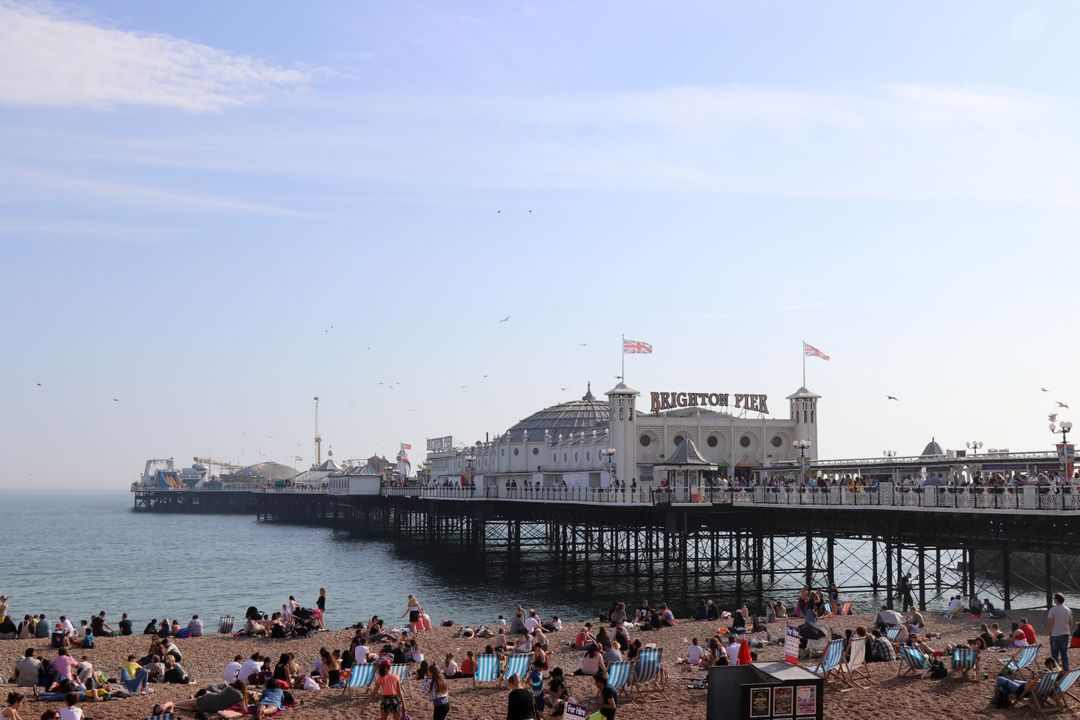
If you own or manage a business with a footprint across Sussex, you already know that what resonates with a customer on Brighton seafront might not land in the same way with someone strolling along Worthing promenade. Every town has its own personality, its own landmarks, and its own local preferences. For years, however, print marketing forced businesses into a frustrating compromise. If you wanted to run a direct mail campaign or promotional flyer drop across multiple towns, you had two choices. You could either print one generic brochure that tried to speak to everyone and ended up inspiring no one, or you could pay for multiple small, expensive print runs to cater to each distinct area.
Variable Data Printing, or VDP, has permanently removed that dilemma. Today, a single print run can deliver completely tailored, location-specific printed pieces directly to individual households and businesses across Brighton, Hove, Worthing, Eastbourne, and beyond. Every single sheet that comes off the press can feature unique imagery, local address details, region-specific promotional offers, and custom calls to action, all driven by a single structured spreadsheet.
At Print Lord, we believe print should work harder for your marketing budget. Here is how geographic print personalisation works in practice, why it outperforms static bulk mail, and how Sussex businesses can put it into action without the technical headache.
Understanding Geographic Variable Data Printing
To understand geographic personalisation, it helps to dismantle the old myth that print is a blunt, mass-produced tool. Variable Data Printing is a digital print process where elements such as text, graphics, maps, and images can be swapped from one printed piece to the next without stopping or slowing down the printing process.
Rather than treating a batch of five thousand postcards as identical carbon copies, modern print equipment reads your data file as it prints. If row twenty-four of your customer file shows an address in Brighton, the press pulls in an image of the iconic Palace Pier or the Royal Pavilion, inserts the phone number for your Brighton branch, and presents an invitation to a local VIP event in Kemptown. If row twenty-five shows an address in Worthing, the press instantly replaces those elements with a picture of Worthing Pier, details for your Chapel Road office, and an offer valid exclusively at your Worthing venue.
The entire batch is printed in a single continuous production run. You secure the bulk printing economies of scale while delivering hyper-targeted, one-to-one marketing that feels intimate, personal, and immediately relevant to the person holding the paper.
A Real-World Sussex Example: Brighton versus Worthing
Let us walk through a practical scenario to see how this operates on the ground. Imagine a regional home improvement firm, a property agency, or a boutique gym group with locations in both Brighton and Worthing.
If this business sends out a generic postcard across the county with a picture of a generic high street and a central 0800 telephone number, the response rate will usually hover around the standard industry baseline. Why? Because it feels like junk mail. It looks like a national corporate chain firing blind shots into letterboxes.
Now consider what happens when geographic personalisation is applied across that exact same mailing list:
The Brighton Recipient Experience
A homeowner in Seven Dials or Hanover opens their front door and picks up a postcard from the mat. The front cover displays a crisp, vibrant photograph of Brighton’s historic Lanes or the famous seafront architecture. The headline speaks directly to local living: “Upgrading your Brighton home this autumn?” Inside, the listed address points straight to your Brighton showroom on Western Road, complete with a local 01273 telephone number and the direct name of your local branch manager. The promotional offer highlights a discount on heritage window fittings suitable for local conservation areas.
The Worthing Recipient Experience
On the exact same morning, a resident in West Worthing or Broadwater receives their postcard from the same print run. However, their card features a stunning view of Worthing seafront and the South Downs backdrop. The headline reads: “Bringing fresh style to Worthing homes this season.” The contact details direct them to your Worthing branch on Montague Street, complete with a local 01903 telephone number. The featured offer highlights coastal-durable exterior treatments tailored specifically for properties exposed to sea spray along the Worthing coastline.
Because the imagery and copy immediately reflect the reader’s immediate surroundings, cognitive friction disappears. The recipient does not have to search for a local branch or wonder if your service covers their area. The piece feels local, trustworthy, and intentional.
Why Location-Based Print Outperforms Generic Mail
The human brain is naturally wired to notice familiar patterns and local landmarks. When someone sees a photo of a street they walk past every week, their attention is captured instantly. In an age where digital inboxes are overflowing with generic spam, a high-quality physical postcard that demonstrates explicit local relevance creates a powerful physical touchpoint.
Geographic print personalisation delivers several clear business advantages:
- Higher Response Rates: Personalised direct mail consistently achieves significantly higher response rates than un personalised bulk drops. When imagery, local contact details, and offers reflect the recipient’s town, conversion rates jump dramatically.
- Enhanced Local Authority: Presenting dedicated local branch numbers and neighbourhood-specific details builds immediate trust. It proves that you are an established local presence, not a distant entity operating from a far-off call centre.
- Reduced Waste and Cost: Instead of setting up five separate print jobs with individual plate changes, set-up fees, and short-run premiums, geographic VDP consolidates everything into a single streamlined run.
- Smarter Campaign Testing: You can test different local offers simultaneously across different towns to discover which promotions drive the highest return on investment in specific demographics.
How to Prepare Your Data for Location-Based Print
Many marketing managers worry that setting up a geographic VDP campaign requires complicated software or advanced data science. In truth, if you can organize a simple Microsoft Excel file or export a clean spreadsheet from your CRM system, you already have everything required to run a personalised campaign.
Your spreadsheet simply needs clear columns for your core variable fields:
- Contact Details: First name, last name, street address, town, and postcode.
- Location Tag: A column designating the target branch or regional zone (for example, “Brighton”, “Worthing”, “Hove”, or “Chichester”).
- Branch Details: Local phone number, local branch address, and local manager name.
- Image Key: A simple code or filename corresponding to the local image asset to be pulled onto the design (such as “brighton-seafront.jpg” or “worthing-pier.jpg”).
- Specific Offer Code: A unique promo code or discount tailored to that regional audience.
At Print Lord, we take that raw spreadsheet, run automated proofing checks, and map the data fields directly into our pre-flight print workflows. We check that every image asset is high resolution, every address field aligns perfectly, and every layout detail looks crisp and professional before a single drop of ink touches paper.
Bridging Physical Print and Digital Analytics with Dynamic QR Codes
Location-based print personalisation does not end with images and text. You can also integrate dynamic, personalised QR codes onto each individual postcard or brochure.
Instead of sending every recipient to your main website homepage, a Brighton prospect can scan their card’s QR code and be directed straight to a dedicated Brighton landing page featuring local client testimonials, local staff photos, and an online booking calendar for the Brighton team. Meanwhile, scanning the Worthing card takes the user to a Worthing-specific landing page.
You can even embed unique tracking parameters inside each recipient’s QR code. This allows your marketing team to track precisely who scanned their card, when they scanned it, and whether they went on to request a quote or complete a purchase online.
This seamless connection between physical direct mail, local landing pages, and CRM tracking turns your print campaign into a fully measurable, high-performing lead generation engine.
Let Print Lord Guard Your Brand Across Sussex
Print Lord was founded on the principle that print should be personal, precise, and practical. We refuse to push clients into rigid, automated online portals where no one checks artwork, no one questions flawed data, and no one cares if your campaign succeeds.
Whether you are planning a regional campaign across Brighton, Hove, Worthing, or the wider South East, our team provides the expert guidance, hands-on support, and technical expertise needed to execute Variable Data Printing flawlessly. We ensure your brand integrity is protected, your messaging is sharp, and your print arrives on brand and on time.
If you are ready to make your next Sussex print campaign work harder, talk to Print Lord today. Let us show you how geographic personalisation can transform your response rates and turn local print into your most profitable marketing channel.