For over two decades, email footers, corporate banners, and well-intentioned digital campaigns have repeated a single, persistent slogan: “Please consider the environment before printing this email.” The underlying logic seems disarmingly simple on the surface. If you do not use paper, you do not cut down trees. If you do not cut down trees, you save the forest.
Except that is not how sustainable forestry works. In fact, the assumption that going paperless automatically saves trees is one of the most widely accepted eco-myths of the modern era.
At Print Lord, we have spent decades at the coalface of the print industry, and we believe it is time to dismantle the paperless lie with verifiable facts, credible research, and straight-talking truth. Far from destroying forests, the commercial paper and print industry in Europe actively funds, protects, and expands sustainable forestry. When you choose responsibly sourced print, you are not causing deforestation. You are supporting a vibrant, renewable circular economy that keeps European woodlands thriving as active carbon sinks for generations to come.
European Forests Are Growing, Not Shrinking
When people imagine timber harvested for paper, they often picture ancient rainforests being clear-cut for single-use products. That image is completely disconnected from the reality of modern European paper production.
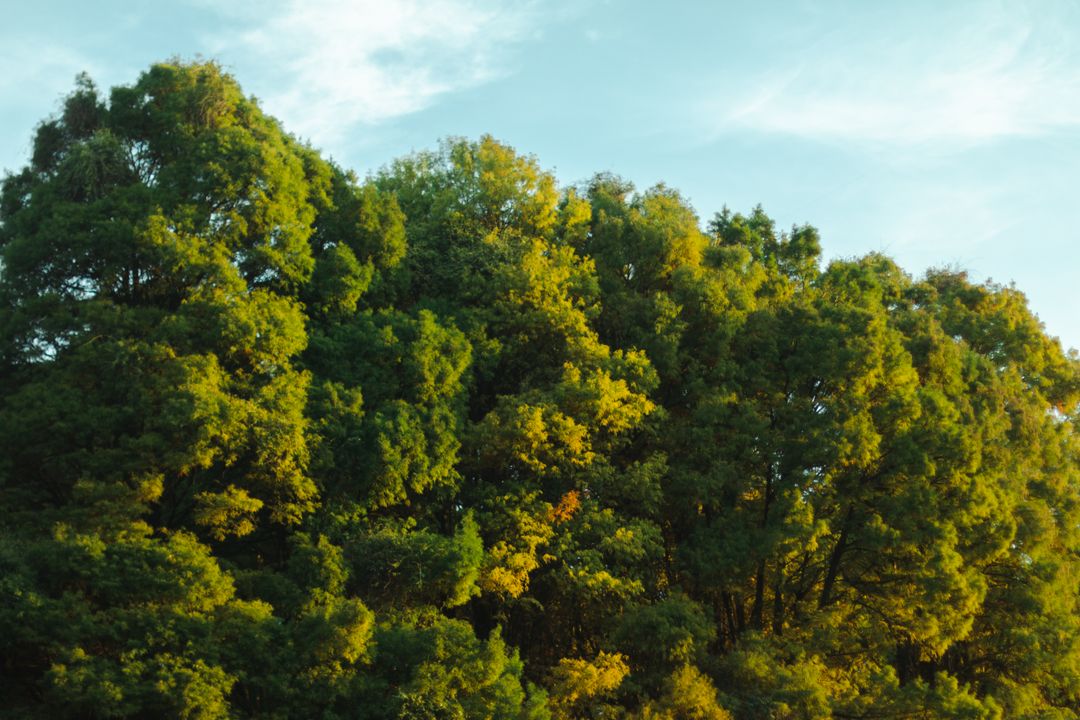
According to research and data published by Two Sides, an organisation dedicated to fact-checking environmental claims about print and paper, European forests have been growing continuously for decades. Between 2005 and 2020, European forest cover expanded by an area equivalent to 1,500 football pitches every single day. That translates to an increase of roughly 58,300 square kilometres of woodland across the continent over a fifteen-year period.
How is this possible during a period of massive global demand for communication materials? Because the paper industry does not operate like a mineral extraction business. It operates like sustainable agriculture. Timber harvested for paper production is grown as a managed crop, specifically planted, nurtured, harvested, and replanted in strict accordance with rigorous European forestry laws.
How Commercial Demand Funds Sustainable Woodland Growth
To understand why going paperless does not save trees, you must understand the economic reality of land use. Forest owners, whether private landowners, local communities, or commercial timber managers, incur significant ongoing costs to maintain, protect, and manage woodland. They must manage disease, prevent wildfires, clear deadwood, and invest in long-term forest care.
If there is no commercial market for sustainably grown timber, land owners face economic pressure to convert that land to alternative, more profitable uses. In many parts of the world, unmanaged land is cleared for intensive agriculture, commercial property developments, or industrial infrastructure.
When businesses purchase paper sourced from certified sustainable forests, they create a predictable economic incentive for land managers to keep planting trees. Demand for sustainable paper ensures that woodland remains woodland. By providing a financial model that rewards long-term forestry management, commercial paper sourcing funds the continual planting of new trees across Europe. Far from shrinking the canopy, commercial demand actively pays for its expansion.
The Power of Young Trees as Active Carbon Sinks
The environmental value of sustainable forestry extends far beyond the simple counting of trees. It plays a vital role in carbon sequestration.
Trees absorb carbon dioxide from the atmosphere as they grow, storing carbon in their wood, roots, and surrounding soil while releasing clean oxygen back into the air. However, a tree’s rate of carbon absorption is not constant throughout its life. Young, rapidly growing trees absorb carbon dioxide at a significantly higher rate than ancient, mature trees that have reached biological equilibrium.
In a responsibly managed sustainable forest, timber is harvested at maturity and immediately replaced with young saplings. This continuous cycle of planting, growth, selective harvesting, and replanting keeps the forest in a constant state of active carbon absorption. Furthermore, the carbon absorbed by the trees remains locked inside the harvested wood fibers throughout the lifespan of the paper product and across multiple recycling cycles.
Paper manufactured from these managed forests is not a dead-end pollutant. It is a biological product made from a 100% renewable resource that actively sequesters carbon during its creation and retains that carbon throughout its useful life.
Understanding the Circular Economy of Paper Recycling
Unlike electronic devices, which often end up in landfill or require complex, energy-intensive processes to salvage trace amounts of precious metals, paper has one of the highest recycling rates of any material on earth.
In Europe, the paper recycling rate consistently exceeds 70%, making paper a model for the circular economy. Paper fibers can be recycled and reused up to seven times to manufacture new print materials, packaging, and cardboard. Each time paper is recycled, it reduces the need for raw energy in processing while keeping the captured carbon trapped within the physical material.
When the raw material originates from certified sustainable sources, such as FSC (Forest Stewardship Council) or PEFC (Programme for the Endorsement of Forest Certification) certified woodlands, the entire supply chain becomes a closed-loop system. You start with sunlight, rain, and sustainably managed soil, create a tactile material that delivers your message with authority, recycle it multiple times, and ultimately return it safely to the biological cycle.
Paperless vs Sustainable Choice: Making Informed Decisions
None of this is to suggest that print should be wasted or produced thoughtlessly. Against the propaganda of the paperless lie, our mission is not about ignoring environmental responsibilities; it is about demanding truth, evidence, and balance.
Replacing print with digital channels does not eliminate an environmental footprint; it simply shifts that footprint to data centres, server farms, electricity grids, and electronic waste streams. The intelligent approach for modern businesses is not to abandon paper based on false assumptions, but to ensure that every printed piece is specified, sourced, and produced responsibly.
When you plan your marketing campaigns, collateral, and business stationery:
- Look for FSC or PEFC certifications on all paper stocks.
- Choose uncoated or responsibly coated papers that recycle easily.
- Opt for vegetable-based inks rather than solvent-based alternatives.
- Work with print partners who manage waste meticulously and eliminate unnecessary plastic laminates.
- Use targeted techniques like Variable Data Printing to ensure every printed piece is relevant, reducing overall volume while increasing response rates.
Partnering with Print Lord: On Brand, On Time, and Sustainably Sourced
At Print Lord, we take pride in being guardians of your brand and defenders of the craft. We refuse to accept the propaganda of the paperless lie, and we hold ourselves to the highest standards of production, accuracy, and environmental responsibility.
Every project we handle, from bespoke packaging and corporate stationery to large-scale marketing campaigns, is produced using sustainably sourced papers from certified European mills. We help you select the exact stocks, weight, and finishes that carry your message with majesty, precision, and complete peace of mind.
Print done right is not a threat to the environment; it is a sustainable, memorable, and powerful medium that commands attention and builds long-term trust.
If you are ready to create print that works harder for your business without falling for environmental myths, let us talk.
Print Lord. At your service. On brand. On time.
printlord.co.uk