For well over a decade, corporate email signatures have delivered a familiar, pious instruction: “Please consider the environment before printing this email.” It feels responsible. It feels modern. It costs nothing to type, and it gives the sender a quiet moment of ecological self-satisfaction.
Yet almost nobody stops to consider what happens when that email is sent instead. Where does it go? What powers the server that receives it, indexes it, scans it for spam, and stores it in the cloud for all eternity?
The myth that digital communication is entirely weightless, harmless, and carbon-free is one of the most successful pieces of corporate positioning in modern history. We have been conditioned to believe that anything on a screen is intrinsically green, while anything on paper is a crime against nature.
The reality, as always, is far more subtle and considerably more interesting. When you look closely at the complete lifecycle of digital media alongside paper manufacturing, the picture changes entirely.
The Invisible Footprint of Digital Infrastructure
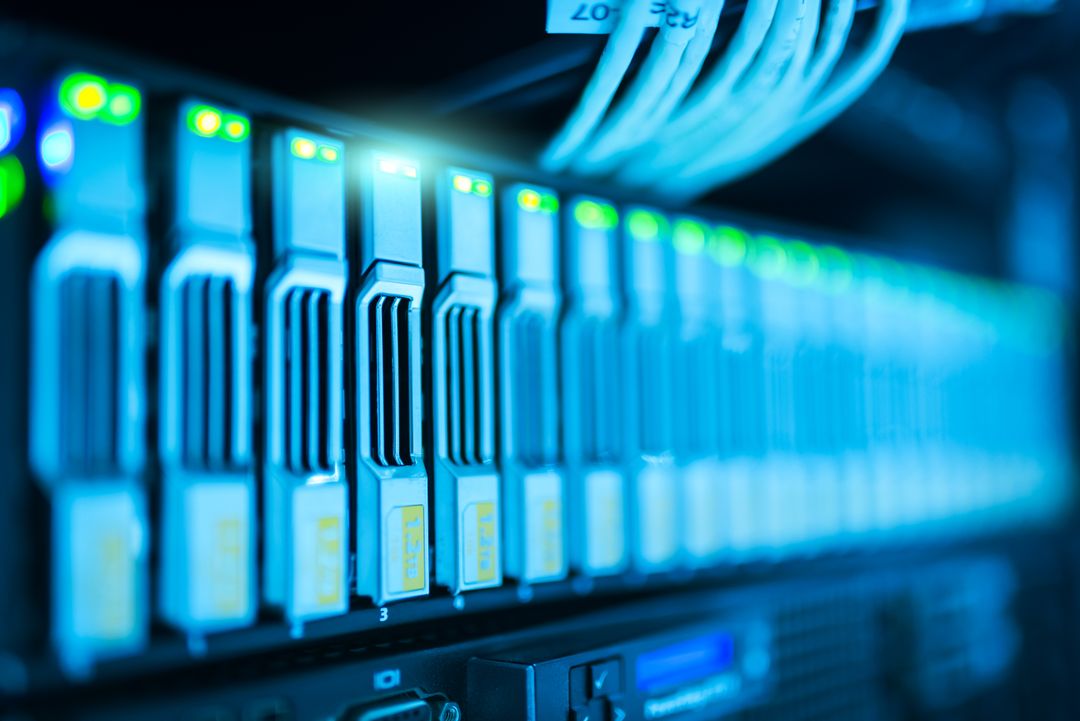
Every single email, cloud back-up, video stream, and online advertisement relies on physical infrastructure that consumes colossal amounts of energy. Behind the sleek glass of your smartphone or laptop lies a global web of hyper-scale data centres, fiber-optic networks, and subterranean cables that run twenty-four hours a day, seven days a week.
Data centres require vast quantities of electricity not only to process calculations, but also to power industrial cooling systems that prevent thousands of stacked servers from overheating. According to global energy research, the technology sector currently accounts for a substantial and rapidly growing share of worldwide electricity consumption.
Consider cloud storage. When an email is sent, it does not simply vanish into thin air when read. It remains stored across redundant data centres, continuously drawing power so that it can be retrieved five years later if needed. Millions of unread newsletters, archived attachments, and automated notifications sit on spinning hard drives, consuming electricity every second of every day.
Water usage is another hidden consequence. Data centres consume millions of litres of water daily for evaporative cooling, often in regions already struggling with water stress. That innocent email attachment carries a tangible, ongoing ecological cost that never appears on a monthly utility bill.
The Growing Crisis of E-Waste
Energy consumption is only one part of the digital equation. The hardware itself creates an enormous environmental challenge known as electronic waste, or e-waste.
Servers, laptops, smartphones, and networking equipment have notoriously short lifespans. Commercial infrastructure is regularly decommissioned and replaced every three to five years to keep pace with processing demands and software updates.
Extracting the raw materials for digital hardware requires energy-intensive mining for lithium, cobalt, gold, copper, and rare earth elements. The processing of these elements frequently causes heavy metal contamination, soil degradation, and high carbon emissions.
When digital hardware reaches the end of its useful life, recycling it is exceptionally complex. A server consists of bonded plastics, glass, toxic heavy metals, and intricate circuit boards that are difficult to separate safely. Consequently, a vast proportion of global e-waste ends up incinerated or in landfill, where hazardous substances can leach into soil and water supplies.
The European Paper Circular Economy
Now let us look at the medium that corporate policy so eagerly dismisses: paper.
Unlike rare earth metals, paper is manufactured from a natural, renewable resource. European forests grown for paper production are carefully managed, expanding continuously as active carbon sinks. But the true strength of paper lies in its exceptional recycling infrastructure.
In Europe, paper achieves a recycling rate well above 70%, making it one of the most successful circular economy materials in existence. When a paper leaflet, brochure, or cardboard package finishes its job, it does not require complex chemical extraction to be reused. It is simply repulped, cleaned, and remade into new paper or packaging materials.
A single paper fibre can be recycled up to seven times before it becomes too short to bond. Even then, the residual natural fibres break down organically without leaving toxic residues or microplastics behind.
Comparing Lifecycles: Continuous Draw vs Circular Loop
The crucial distinction between digital and printed communication lies in how they consume energy over time.
Digital communication operates on a continuous energy draw. Every time a digital file is stored, transmitted, rendered on a screen, or backed up, it uses electricity. A digital document continues to consume energy for as long as it exists on a server.
Print, by contrast, requires energy upfront during harvesting, manufacturing, printing, and delivery. However, once a sheet of paper is printed, its ongoing energy consumption is exactly zero. A printed catalogue, user manual, or promotional leaflet can sit on a desk or bookshelf for ten years, providing value every single day, without consuming a single watt of electricity.
When its job is complete, that paper enters a mature, local recycling loop, returning to the mill to become the next generation of paper products.
Making Rational Communication Choices
None of this implies that digital technology is inherently evil, nor does it suggest that print is immune to environmental scrutiny. At Print Lord, we do not advocate for unnecessary print or wasteful paper consumption.
What we do advocate for is intellectual honesty.
Choosing digital simply because someone told you it is automatically greener is not environmental strategy, it is wishful thinking. Every communication channel has an ecological price tag. Digital relies on heavy mining, massive electricity consumption, and complex e-waste management. Print relies on sustainable forestry, clean manufacturing processes, and world-class recycling rates.
When you need long-form engagement, high retention, or tactile brand trust, responsibly sourced print is not just an effective marketing tool, it is an environmentally sound choice.
By specifying FSC-certified paper, using vegetable-based inks, and working with printers who eliminate unnecessary plastic laminates, businesses can deliver impactful physical campaigns that align with true sustainability principles.
Next time someone tells you to go paperless to save the planet, gently remind them about the data centre powering their inbox. If you want to discuss how to create responsible, high-impact print that works hard for your business, talk to Print Lord. On brand. On time.