Paper Weights, Finishes and Stocks Decoded: What Your Printer Wishes You Knew
If you have ever stared at a print order form wondering whether you need 170gsm or 350gsm, silk or uncoated, soft-touch or matt laminate, you are not alone. Most businesses know what they want their print to look like. Far fewer know how to specify it. That gap between intention and instruction is where expensive mistakes happen, and where Print Lord earns its keep.
Consider this your no-nonsense guide to paper weights, coatings and special finishes. By the end, you will know exactly what to ask for, and more importantly, why it matters for your brand.
—
Paper Weight: What Does gsm Actually Mean?
Gsm stands for grams per square metre. It is simply the weight of the paper, and weight is a shorthand for thickness, rigidity and feel. Here is how the scale breaks down in practice:
80-90gsm is standard office copier paper. It works for internal documents, but it feels insubstantial in the hand. It signals budget, not brand.
130-170gsm is the sweet spot for single-sided or double-sided flyers, leaflets and inserts. It has enough body to feel considered without being stiff. If you are putting something in a hand, a bag or a letterbox, this range does the job well.
250-300gsm moves into the territory of postcards, folded brochures and premium flyers. At this weight, the piece starts to feel like it was made with intention. Clients notice. They hold on to it a little longer.
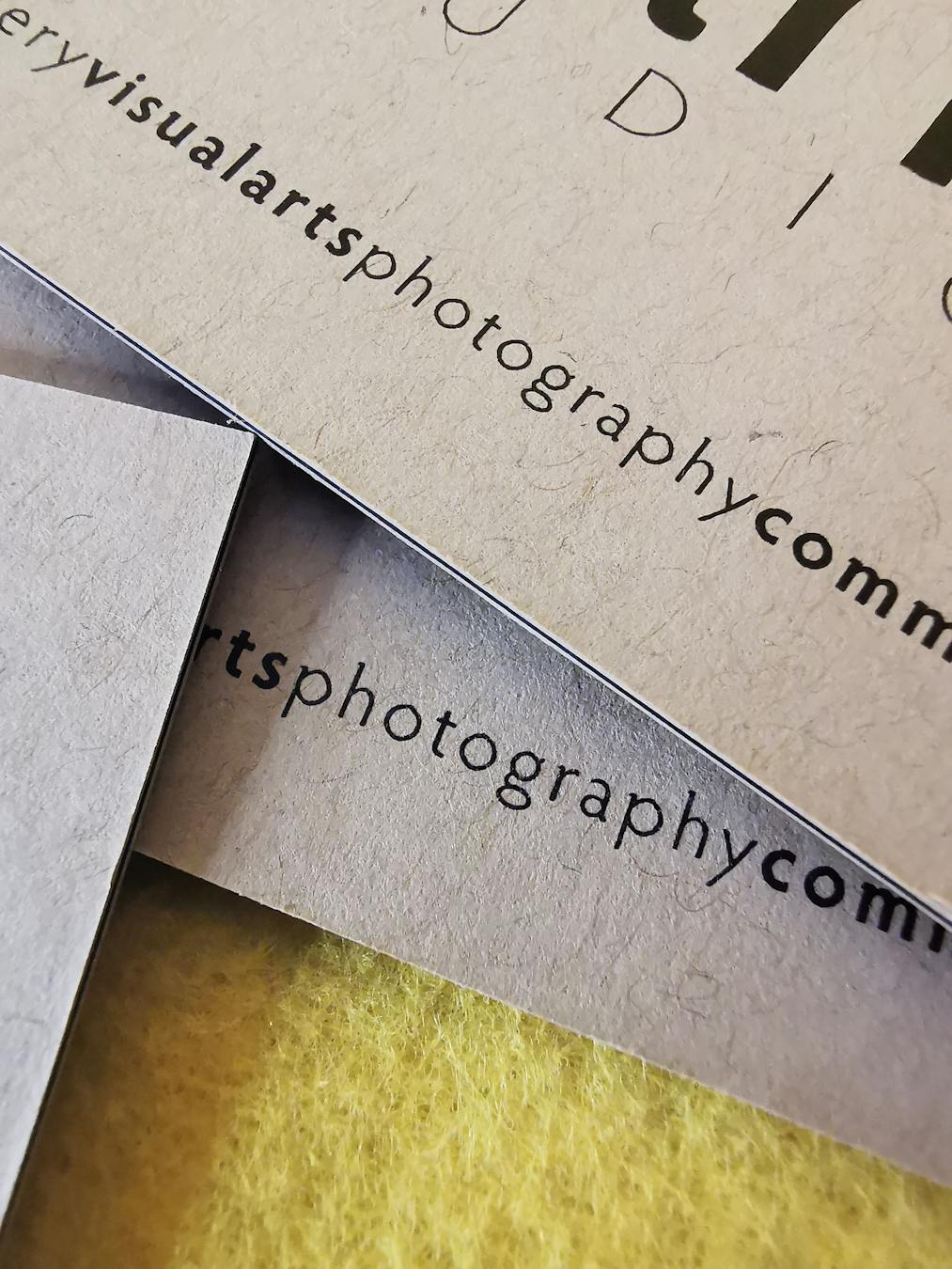
350-400gsm is business card and greeting card territory. At this weight, a card has real authority. It does not buckle, it does not flex, and when someone picks it up, they feel the quality before they read a word.
The rule of thumb: the more important the first impression, the heavier the stock.
—
Coatings: Silk, Gloss, Uncoated and Matt
Once you have chosen your weight, you need to think about the coating. This affects not just appearance but how your print feels, reads and photographs.
Gloss is high-shine and vivid. Colours pop, images jump off the page, and the finish has an energy that works brilliantly for event flyers, promotions and anything that needs to grab attention fast. The downside: it can be hard to write on, and it can look a touch commercial for premium brands.
Silk is the middle ground, and for good reason it is one of the most popular choices. It has a subtle sheen without the mirror-like quality of gloss. Colours still reproduce beautifully, but the finish feels more refined. Brochures, menus and higher-end marketing collateral tend to look their best on silk.
Uncoated stock has no surface treatment at all, which gives it a natural, tactile quality. It reads warmly, absorbs ink to give a slightly softer finish, and feels genuine in a way that coated stocks sometimes do not. It is a favourite for greeting cards, letterheads, craft-style packaging and brands that want to feel approachable and honest. Print Lord’s own Custom Greeting Cards use 350gsm recycled uncoated paper, precisely because the feel matches the sentiment.
Matt (or matt laminate, when applied as a finishing layer) is smooth and non-reflective. It has a quiet confidence about it. Premium brand collateral, luxury brochures and high-end business cards often carry a matt finish because it says quality without shouting. One practical note: matt laminate can show fingerprints more readily than gloss, so it is worth knowing this before committing.
—
Special Finishes: Where Print Becomes an Experience
This is where things get genuinely exciting, and where Print Lord separates itself from any faceless basket-based portal that would never think to mention these options.
Soft-touch lamination is applied over the printed sheet and transforms the surface into something almost velvety. It is tactile in the best possible sense. Clients pick up a soft-touch business card or brochure and they notice. They do not always know why it feels special, they just know it does. If your brand is premium, soft-touch laminate says so before a single word is read.
Spot UV applies a high-gloss, raised varnish to selected areas of a matt-laminated piece. The result is a striking contrast: certain elements, a logo, a headline, an image, literally shine while the rest of the piece stays calm. It is a technique that rewards good design and punishes bad file setup, which is exactly why Print Lord checks every detail before anything goes to press.
Foil stamping presses metallic or pigmented foil onto the surface under heat and pressure. Gold foil on a deep navy card. Silver foil on a black wedding invitation. Copper foil on a boutique wine label. It is unmistakeable, memorable and completely impossible to replicate digitally. If you want something that commands the room, foil is your ally.
Embossing and debossing raise or press your design into the stock itself, creating a three-dimensional effect that is purely tactile. No ink, no coating, just shape and shadow. Used well on letterheads, covers or business cards, embossing makes a quiet but powerful statement.
—
Matching Stock to Product: A Quick Guide
Knowing the options is one thing. Knowing when to deploy them is another. Here is how Print Lord tends to think about it:
Business cards deserve at least 350gsm with a finish. Soft-touch laminate or spot UV turns a functional item into a brand moment. If your card is flimsy, so is the impression you leave.
Flyers and leaflets work best on 130-170gsm silk or gloss. They need to travel, stack, and survive being handled by strangers. Gloss handles colour-heavy designs; silk works better when the design is more restrained.
Brochures and menus call for 250-300gsm silk or uncoated cover stock, with lighter internal pages if the piece is folded or bound. The cover is the handshake. Make it count.
Greeting cards suit 350gsm uncoated almost universally. The warmth and texture of uncoated stock complements a personal message far better than a shiny coated finish ever could.
—
Why You Should Never Have to Guess
The click-to-basket print portals of the world would have you select from a dropdown and hope for the best. If your brand comes back looking flat, that is your problem now. If the weight feels wrong or the finish disappoints, there is no one to call.
Print Lord operates differently. Every enquiry is handled by a real person who knows print, asks the right questions, and tells you what will work before anything goes near a press. That is not a sales pitch, it is simply how print should be done.
Summer is a busy season. Menus are being updated, exhibitions are being planned, event materials are being briefed and hospitality brands are gearing up for their biggest months. Now is precisely the time to get your print right, not to gamble on a basket and a guess.
—
Make Your Mark This Summer
Print Lord is here to guide you through every specification, every finish and every decision. Whether you need a stack of flyers for a festival or a premium brochure for a summer launch, the right stock makes the difference between material that gets kept and material that gets binned.
Get in touch with the team at hello@printlord.co.uk, call 01273 526679, or visit shop.printlord.co.uk to explore Print Lord’s curated product range.
Print Lord. At your service. On brand. On time.